Showing posts with label mohammad. Show all posts

7/10/2013

The Prophet Muhammad s.a.w in Ramadan

It was Muhammad (peace and blessings of God be upon him) who made us raise our eyes from the dust beneath to view the glory of the starry heavens above. It was Muhammad who led us from the depths of darkness to the grandeur of the light of God.The Prophet was the one who led us to break our stone statues and wooden gods. It was Muhammad who lifted us out of the filth of idolatry to relish the serenity of God’s transcendence. On the Night of Power in one Ramadan, the Qur’an descended on Muhammad, and he received its first verses in the Cave of Hira. (Ibn Abbas) Thereafter the Prophet taught us how to celebrate Ramadan through days of fasting and nights of prayer: to honor each day of Ramadan as a day of patient endurance through fasting, and each night as a night of gratitude through prayers.

An Unexpected Transformation

Fasting is about liberating one’s mind from flights of passion and fits of temper.
The Prophet demonstrated to his people how this world is less important than the next, and how the body is less important than the soul. In fasting, the Prophet taught them step by step how to ignore the physical demands so that the spirit reigns supreme.

Abandoning food, drink, and sex was only a prelude to the next stage of greater significance: of conquering avidity and cupidity, lust and licentiousness; of liberating one’s mind from flights of passion and fits of temper. Indeed the Prophet said:

“The strong person is not the one who can wrestle someone else down. The strong person is the one who can control himself when he is angry.” (Bukhari)

Also about the effect of fasting on one’s behavior, the Prophet said,

“Fasting is a shield, so the one who fasts should avoid obscene speech and ignorant behaviour. If someone abuses him or starts to fight with him, he should reply by saying: ‘I am fasting. I am fasting’.” (Bukhari)

The core of fasting according to the Prophet was one’s willingness not merely to give up self-indulgence, but to feel the need of one’s brother as one’s own. And no one was more kind-hearted and generous than the Messenger of God; and his generosity reached its peak in Ramadan. (Bukhari)

The Prophet stressed on the importance of treating people nicely when he said:

“Make things easy for people and do not make them difficult, and cheer people up and do not drive them away.” (Bukhari)

He also said:

The most beloved of actions to God Almighty, is making another Muslim happy, removing a hardship that has befallen him, paying off a debt of his or ridding him of hunger. It is more beloved to me indeed that I walk with my Muslim brother to see to a need of his than secluding oneself in a mosque for a month… (Tabarani)

The heart of one who sincerely fasts is open to the contemplation of the magnificence of the countless bounties of God. That is why the Prophet asked his followers to avoid gluttony:

“The food of two people is enough for three, and the food of three people is enough for four.” (Bukhari)


Gentleness in Hardship

God is All-Merciful and He has expressed His Mercy to us His creatures through the sending of His final messenger Muhammad as an embodiment of mercy. The Prophet said:

“Have mercy to those on earth so that He Who is in Heaven will have mercy on you.” (Tirmidhi)

“The believer is not the one who eats his fill when the neighbor beside him is hungry.” (Bayhaqi)
The Prophet urged Muslims to break their fast right after sunset without any delay.

So it was not surprising that the Prophet’s Companions loved him dearly, as he was the kindest of men, bestowing his mercy not only upon humans but also on other creatures of the world as well.

No leader could be more considerate and solicitous of his followers than Muhammad: he never allowed any Muslim to bear any burden more than they could bear, as taught by God Himself.

For he was well aware of the infirmities of people; and this is evident from his consideration for his followers in the matter of fasting: He taught Muslims to delay the sahur (the pre-dawn meal before fasting) till a little before Dawn Prayer and not to delay the iftar (the meal to break the fast) after the call to  Sunset Prayer so that no unnecessary strain is laid on the fasting person by prolonging the fast time.

During travel in Ramadan, the Prophet would either fast or break his fast; and he allowed his companions to choose between the two, according to their ability.

Similarly during times of heat or thirst they were permitted  to cool themselves by pouring water on the head, and the Prophet himself did so.

His example in the matter of consorting with his wives during Ramadan was not different; he disallowed only such acts that would obviously undermine the fasting.

As for the Tarawih Prayers (the supererogatory night prayers performed in Ramadan), it is recorded that the Prophet began praying them in congregation and then he stopped, fearing that such prayers would become obligatory if he continued to pray them in congregation.

Thus while he demonstrated through his example that the Tarawih Prayers are better offered in congregation, he allowed leniency in the matter out of his mercy.


Seclusion: Refreshing the Soul

In today’s world when people hanker after pleasures, one needs to return to  seclusion from time to time.
The highest point of Ramadan for Muslims is seeking the Laylat al-Qadr (the Night of Power) during the last ten days. One act of worship the Prophet emphasized particularly during this time is itikaf, which is a spiritual retreat in which one confines oneself to a mosque to spend one’s time entirely to the worship and remembrance of God.

In these modern days when people hanker after indulgence in ephemeral pleasures, one needs to return to the seclusion of the house of prayer from time to time; which is essential for one’s spiritual rejuvenation and the return to one’s Creator.

Thus the beloved Prophet has taught us how to use Ramadan as a month for disciplining our intransigent passions, for renouncing our desires for self gratification and for practicing patient endurance in the face of hardships.

The Prophet exhorted us that during Ramadan most especially it is our duty to support and uplift our less fortunate fellow humans.

Above all, Ramadan is a month of  contemplating the Grace and Bounty of God Almighty, of returning to our Guardian Lord in repentance, of sincerely seeking His forgiveness.

Article contributed by  Professor Shahul Hameed

2/01/2011

Prophet mohammad said this 1400 yrs ago!

* Camels will no longer be used as a means of transport;
* People will ride on saddles that aren't saddles (cars?)
* The distance on earth will become short;
* Horses will not be used in wars;
* Muslims will defeat the Byzantines which will end with the conquest of Constantinople · Istanbul);
* The Jews will gather again to live in Bilad Canaan;
* Very tall buildings will be built;
* The disappearance of knowledge and the appearance of ignorance, with much killing;
* Adultery will become widespread, and the drinking of wine will become common;
* The number of men will decrease and the number of women will increase until there are 50 women to be looked after by one man.
* Islam will become worn out like clothes are, until no one will know what fasting, prayer, charity and rituals are;
* Allah will send a disease to fornicators that will have no cure (Aids?);
* People will begin to believe in the stars and reject AL QADAR (THE DIVINE DECREE OF DESTINY);
* Men will pass by people's graves and say: 'Would that I were in his place'; (large amount of sucidal deaths?)
* The Euphrates will uncover a mountain of gold for which people will fight over (the river of Alfurat that lies near Syria );
* Two large groups of people will fight one another, and there will be many casualties; they will both be following the same religion World War II?);
* Approximately 30 DAJJALS will appear, each one claiming to be the messenger of ALLAH;
* Earthquakes will increase;
* Time will pass quickly;
* Afflictions will appear;
* Killing will increase;
* Wealth will increase;
* Women will be wearing clothes but not wearing clothes

* THE PROPHET (saw) SAID: 'IF MY UMMAH BEARS 15 TRAITS (QUALITIES), TRIBULATION WILL FOLLOW IT.' (DAY OF JUDGEMENT) SOMEONE ASKED,'WHAT ARE THEY O MESSENGER OF ALLAH?' HE (saw) SAID:

* When any gain is shared out only among the rich, with no benefit to the poor;
* When a trust becomes a means of making profit;
* When paying ZAKKAT becomes a burden;
* When voices are raised in the mosque;
* When the leader of a people is the worst of them; when people treat a man with respect because what he may do;
* When much wine is drunk; red wind or the earth swallow them, or to be transformed into animals.'
* 'IMRAN IBN HUSAYN SAID: 'THE PROPHET (AS) SAID, 'SOME PEOPLE OF THIS UMMAH WILL BE SWALLOWED BY THE EARTH, TRANSFORMED INTO ANIMALS, AND SOME WILL BE BOMBARDED WITH STONES'. ONE OF THE MUSLIMS ASKED, WHEN WILL THAT BE O MESSENGER Of ALLAH?' HE SAID, 'WHEN SINGERS AND MUSICAL INSTRUMENTS WILL BECOME POPULAR, AND MUCH
WINE IS DRUNK.'' THE GREATER SIGNS OF THE HOUR The Quran will disappear in one night, even from the people's hearts, and no Ayah will be left on earth. (Some groups of old people will be left who will say: 'We heard of fathers' saying 'LAILLAHA ILLA ALLAH' so we repeat it);

* The appearance of the MAHDI;
* The appearance of the DAJJAL (Anti Christ);
* The appearance of Ya'juj and Ma'juj (biblical Gog and Magog);
* Isa (Jesus) will come during the time of Dajjal;
* The rising of the sun from the west;
* The destruction of the Ka'ba and the recovery of its treasures;
* The smoke.
As we look at this article we realize how true the Messenger (P.B.U.H) was these signs were prophesized 1400 years ago!!!

Always Remember:-'Ask ALLAH For A Strong Back Rather Than Asking Lighter Weight ! !

All About Mohammad (PBUH)

 Holy Names of Prophet Muhammad (SAW):  
1. Muhammad
2. Ahmed
3. Hamid
4. Mahmood
5. Mahi
6. Hashir
7. Aaqib

About Holy Birth of Prophet Muhammad (SAW):   
Islamic Dates/Day/Time/Place:
12th Rabbi-ul-Awwal, Monday, Early in the morning (before sunrise) at Holy Makkah
English date/year: 17th June 569. A.D
Hindi date/year: 1st of Jaith 3672 Kul Jug
Other Dates
- 1st year of elephant. (on 40th day after elephant event)
- 2675th year to Prophet Noah's flood
- 2585th year to Prophet Ibrahimi year
 About Death of Prophet Muhammad (SAW):  
- 12th Rabbi-ul-Awwal 11 Hijrah
- 23rd Nabvi
- 8th June, 632 A.D
- At the time of Chasht (after sunrise) in Madina Munawwarah
- Died in the house of Bibi Ayesha (RA).
- Buried in the house of Bibi Aysha (RA)
- Grave is exactly where he died in the room.
 Total Life Span of Prophet Muhammad (SAW):  
- 63 years + 0 month + 4 days + 6 hours or
- Total 22330 days or
- Total 535924 hours

- Stay in Holy Makkah - 53 years
- Stay in Holy Madina - 10 years
 Uncles of Prophet Muhammad (SAW):  
Total Uncles - 9
Only 2 embraced Islam - Syedna Hamza (RA) & Syedna Abbas (RA)

7 Uncles did not embraced Islam -
Aabu Talib, Abu Lahab, Zubair, Maqoom, Zarrar, Haris & Mugheera
 Aunts of Prophet Muhammad (SAW):  
Total Aunts - 6
Only one embraced Islam - Syeda Safia (RA)

5 Aunts did not embraced Islam -
Um-e-Hakeem Baiza (Grandmother of Syedna Usman (RA)),
Aroohi (some says perhaps she accepted Islam but not confirmed),
Ateka (some says perhaps she accepted Islam but not confirmed),
Barrah, Amemmah

 Wives of Prophet Muhammad (SAW) Azwaj-e-Mutaherat: 
Total Wives: 12
Wife Name
Age at the time of Nikkah
Wife's Status
Year
Prophet's Age
Wife's Age
Died
Buried
Before Nikkah
Other
Khateeja
15 B.N
25
40
10 A.N  
Makkah
Widow Twice

Sudah
10 A.N
50
50
23 hijra
Madina
Widow

Ayesha
02 hijra
55
10
57 hijra
Madina
Virgin

Hafsa
03 hijra
56

45 hijra
Madina
Widow
Husband died in Badar
Zanab Hazima
04 hijra
57


Madina
Widow
Husband died in Uhad
Umm-e-Salma
04 hijra
57

63 hijra
Madina
Widow
Husband died in Uhad
Zanab Hajash
04 hijra
57

20 hijra
Madina
Divorced

Javaria
05 hijra
58
15
50 hijra
Madina
Divorced

Umm-e-Habiba
05 hijra
58

44 hijra
Madina
Separated
Husband left Islam
Safia    
05 hijra
58
15
50 hijra
Madina
Divorced

Memoona
06 hijra 
59

51 hijra
Sarif  
Widow Twice

Maria Qubtia


16 hijra
Madina


Important Note:
a) Syeda Ayesha (RA) was the daughter of Sydna Abu Baker Siddique (RA)
b) Syeda Hafza was the daughter of Syedna Umer (RA)
c) Syeda Umm-e-Habiba was the daughter of Abu Sufiyan
d) Only Syeda Khateeja and Syeda Zainab Hazima died in prophet's life
e) 9 wives were alive when Prophet SAW passed away.
 Sons of Prophet Muhammad (SAW): 
Total Sons - 3
1. Syedna Qasim from Khateeja (RA)
2. Syedna Abdullah (Tayab, Tahir) from Khateeja (RA)
3. Syedna Ibraheem from Maria Qubtia (RA)
Note: All the sons died in their childhood, first 2 are burried in Jannat-ul-Moalla, Makkah and last one is in Jannat-ul-Baqqi, Madina.
 Daughters of Prophet Muhammad (SAW): 
Total Daughters - 4
1. Syeda Zainab (RA), married with Abual Bin Aas Bin Rabbi
2. Syeda Ruqayyia (RA), married with Syedna Usman Bin Affan
3. Syeda Um-e-Kulsoom (RA), married with Syedna Usman Bin Affan
4. Syeda Fatima Zuhra (RA),  married with Syedna Ali Bin Abi Talib.
Note: All daughters were from Um-ul-Momeneen Syeda Khatija (RA). All daughters except Syeda Fatima died in Prophets' life. All daughters buried in Jannat-ul-Baqi, Madina.
 
 Battles: 
Battles in which Prophet took part physically, called Ghazwat. Battles in which Prophet not command physically, called Sarayas
Total Ghazwats/Sarayas - 27
01. Wadan
08. Qar-Qara Lekaarmd
15. Banu Mutlaq
22. Vadi-e-Anqra
02. Bawat
09. Uzfan
16. Ahzab/Trench
23. Zat- ul- Raqa
03. Safwan 
10. Uhad
17. Banu Qareeza
24. Makkah
04. Zu-Alasheera
11. Hmra-O-Asad
18. Banu Lahyan
25. Hunnain
05. Badar Kura
12. Banu Naseer
19. Ze-Farda
26. Taif
06. Qaneeqah
13. Badar-Akhir
20. Hudabiya
27. Tubook
07. Al-Saweeq
14. Domta Jandol
21. Khyber


  Timeline of Muhammad (SAW)
Important dates and locations in his life...
Before Vahee
c. 569   Death of his father, 'Abd Allah'; Before Holy Birth
c. 570   Possible date of birth, April 20: Mecca
c. 576   Death of Mother Bibi Amena; 6th year after Birth
c. 578   Death of Grandfather Abu Mutalib; 8th year after Birth
c. 583   First business trip towards Syria; 13th year after Birth 
c. 585
   Participation in Harb-e-Fajar (battle for Kabba's Hurmat); 15th year after Birth
c. 593   Second business trip (with Mehsra slave of Bibi Khateeja RA); 23rd year after Birth
c. 595   Meets and marries Khadijah (RA); 25th year after Birth
c. 605   Resolved tribe conflicts (fixing of Hajr-e-Asvad); 35th year after Birth
c. 606   Starting to go to Cave Hira; 36th year after Birth
c. 610   First reports of Qur'anic revelation (Vahee); 40th year after Birth
After Vahee
c. 610   Appears as Prophet of Islam
c. 613   Begins spreading message of Islam publicly
c. 614   Begins to gather following in Mecca
c. 615   Emigration of Muslims to Ethiopia
c. 616   Banu Hashim clan boycott begins
c. 618   Medinan Civil War
c. 619   Banu Hashim clan boycott ends
c. 619   The year of sorrows: Khadijah and Abu Talib die
c. 620   Isra and Mairaj
c. 622   Emigrates to Medina (Hijra)
c. 624   Battle of Badr: Muslims defeat Meccans
c. 624   Expulsion of Banu Qaynuqa
c. 625   Battle of Uhud: Meccans defeat Muslims
c. 625   Expulsion of Banu Nadir
c. 626   Attack on Dumat al-Jandal (Syria)
c. 627   Battle of the Trench
c. 627   Destruction of Banu Qurayza
c. 627   Subjugation of Dumat al-Jandal
c. 628   Treaty of Hudaybiyya
c. 628   Gains access to Meccan shrine Kaaba
c. 628   Conquest of the Khaybar oasis
c. 629   First hajj pilgrimage
c. 629   Attack on Byzantine empire fails: Battle of Mu'tah
c. 630   Attacks and bloodlessly captures Mecca
c. 630   Battle of Hunayn
c. 630   Siege of Taif
c. 630   Conquest of Mecca
c. 631   Rules most of the Arabian peninsula
c. 632   Attacks the Ghassanids: Tabuk
c. 632   Farewell hajj pilgrimage
c. 632   Death (June 8): Medina
Very imp.
 Sayings of Prophet Muhammad (SAW)
The Holy Prophet (Peace be upon him) said:

1) Four things that make your body sick:
a) Excessive talking
b) Excessive sleeping
c) Excessive eating
d) Excessive meeting

2) Four things that destroy the body:
a) Worrying
b) Sorrow
c) Hunger
d) Sleeping late in the night

3) Four things that dry the face & take away its happiness:
a) Lying
b) Being disrespectful
c) Arguing unnecessarily
d) Immorality

4) Four things that increase the wetness of face & its happiness:
a) Piety
b) Loyalty
c) Generosity
d) Being helpful to others

5) Four things that stop the Rizq (Sustenance):
a) Sleeping in the morning (from Fajr to sunrise)
b) Not or irregular in Prayers
c) Laziness / Idleness
d) Treachery / Dishonesty

6) Four things that increase the Rizq:
a) Staying up in the night for prayers
b) Excessive Repentance
c) Regular Charity
d) Zikr (Remembrance of Allah)

12/07/2010

Aap Ke Jaisa Dunya Me Koi Ho Nahi Sakta

Aap Ke Jaisa Dunya Me Koi Ho Nahi Sakta,
Dunya Me Apki Barabari Koi Kar Nahi Sakta,
ALLAH Ne Chuna Hai Apko, Hamare Liye Rasool,
Hai Aap ALLAH Ke Sab Se Pyaare, Hamare Rasool...

Jeena Ka Tareekha Aap Har Tarah Se Bata Kar Gaye,
ALLAH Ne Jo Kaha Woh Har Tareeqe Se Sikha Kar Gaye,
Kabhi Kabhi Aankh Se Aansu Hamare Aahi Jaate Hai,
Jab Kabhi Aapki Baatao Se Log Uhi Mukhar Jaate Hai...

Aapne Humse Kahaa Ke ALLAH Ek Hai, Sajda Karo,
Kuch Log Nahi Samjhe Aur Kaha Ke Sifarish Karo,
Jab ALLAH Ne Hi Kaha Ke Woh Hum Se Qareeb Hai,
Dunya Aaj Kal Iman Me Kuch Ziyadah Gareeb Hai...

Aap Ne Kaha Dard Ki Halat Me Bhi ALLAH Ko Yaad Karo,
Log Kehte Hai Ke Nazar Ka Toka Hai, Nimbo Waara Karo,
Jab ALLAH Kabhi Logo Ke Sabr Ka Imtehaan Leta Hai,
Woh kisi aur Ka Daman Tham Leta Hai...

Haath Utha Kar Dua Hai Ab ALLAH Aap Se Hamari,
Tamaam Bade Aur Chote Qataye Maaf Kare Hamari,
Ummathe Rasool Par Rehmatao Ki Barish Aap Kariye,
Hame Aap Bas Aala Jannat Ke Raste Par Hi Rakha Kariye....


JAZAKALLAH KHAIR...

12/06/2010

How to look Smart..(Prophets Mohammeds saying

The Holy Prophet (Peace be upon him & his progeny) Said:

1) Four things that make your body sick:

a) Excessive talking
b) Excessive sleeping
c) Excessive eating and
d) Excessive sex.

2) Four things that destroys the body:

a) Worrying
b) Sorrow (Sadness/Grief)
c) Hunger
d) Sleeping late in the night


3) Four things that dry the face & take away its happiness:

a) Lying
b) Being disrespectful / impudent (insisting on something wrong knowingly)
c) Arguing without adequate knowledge & Information
d) Excessive immorality (doing something wrong without fear)


4) Four things that increases the wetness of face & its happiness:

a) Piety
b) Loyalty
c) Generosity (being kind)
d) To be helpful to others without he/she asking for that.


5) Four things that stop the Rizq (Sustenance):

a) Sleeping in the morning (from Fajr to sunrise)
b) Not Performing Namaz or Ir-regular in Prayers
c) Laziness / Idleness
d) Treachery / Dishonesty


6) Four things that bring / increase the Rizq.:

a) Staying up in the night for prayers.
b) Excessive Repentance
c) Regular Charity
d) Zikr (Remembrance of Allah / God).


The Holy Prophet (Peace be upon him & his progeny) also said to communicate to others even if you listen one Verse (Ayah) & this one verse will stand on the day of Judgment for intercession

Get a glimpse of the noble Messenger of Allah

MUHAMMAD
Peace and Blessings of Allah Be Upon Him
The Last Messenger of God

 To help you get a glimpse of the noble Messenger of Allah and benefit through his

model personality
practical teachings
exemplary life and
the proven formula that will provide you peace, success and salvation.


Please read on...


Objective


Peace and blessings of Allah be upon him


Savior and Liberator


Times Before Muhammad


True Concept of God- Lost


Ignorance & Darkness

Barbarism & ruthlessness


Sexual Slavery,  Nudity & Persecution of women


Usury and Exploitation


Fear and terror


Class and Colour discrimination


Times After Muhammad


True Concept of God- Restored


Knowledge & Light

Kindness & mercy


Women's status and rights


Justice and fairness


Peace and security


Love and Brotherhood


Peace and blessings of Allah be upon him


Look around...Where are we today?


God & religion- forgotten
Idol and human worship
Wars, conflicts and killing
Terror and fear
Interest dealings, corruption and exploitation
Injustice, oppression and no human rights
Marginalization of poor and have-nots
Persecution of women and the weak
Nudity and obscenity
Confusion and restlessness

We need Muhammad's guidance...
Peace and blessings of Allah be upon him


Born at Makkah (Saudi Arabia) in 570 AD
Trader in his twenties
Recognized as 'Trustworthy' among his people
First marriage at the age of 25 to Khadija, a widow aged 40 years
Personal Appearance...


Muhammad- An Introduction


" Handsome features, bright face, likeable temperament"


"graceful, handsome, eyes black and large, hair long and thick, voice clear ..."


"... c

11/20/2010

Things Belonging To Prophets

user posted
 image
 
The Hairs of Prophet Muhammad (Peace Be Upon Him)

user posted image user posted image
 
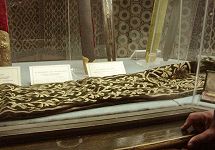
Cover of Prophet Muhammad's Swords (Peace Be Upon Him)

user posted image

Former cover of Prophet Muhammd's Grave (Peace Be Upon HIm)

user posted image
 
Turban belonging to Prophet Yousuf (Peace Be Upon Him)

user posted image user posted image

Dust from the Prophet's Grave (Peace Be Upon HIm)

user posted image

Sandal Belonging to Prophet Muhammad Peace Be Upon Him)

user posted imageuser posted image

Saucepan made from stone belonging to Prophet Ibrahim (Peace Be Upon Him)

10/04/2010

ZIYARAT RAUZA E RASOOL - Sallal la hu alaihi wa aalihi wasallam


PLEASE RECITE DAROOD-E-PAK

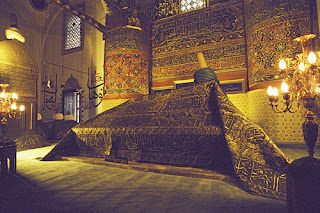
This is view of Rauza e Rasool (P.B.U.H), which is not open for visitors/Zayeriens perhaps not even 0.1% Muslims had the opprtunity to see this view. May ALLAH bless all of us.( Ameen )